
6 Important Case Study Types Explained for Students
Case studies can feel confusing at first. You get your topic and notes, and suddenly you don’t know where to start. But they don’t have to be hard. A case study is a way to look at a real problem, understand it, and explain what works.
For students, knowing the types of case studies makes writing much easier. Some pay attention to one person, some to a group, and some to the whole company. Each type has its own goal and style.
When you know the type, writing becomes faster and clearer. You can explain your ideas without stressing too much. In this blog, we’ll go through the six main types of case studies step by step. You will understand things more simply and in depth.
Mastering the 6 Essential Types of Case Studies
Let’s take a closer look at the six types of case studies. Understanding these types makes writing less stressful and simpler. Each type has a style, purpose, and a way to show information. Once you are clear on what to use, your writing becomes much smoother. If you still think writing case studies is like an uphill task, and you won’t be able to do it on your own, then consider a case study writing service. They have experts who can guide you and cater to your case study assignments professionally.
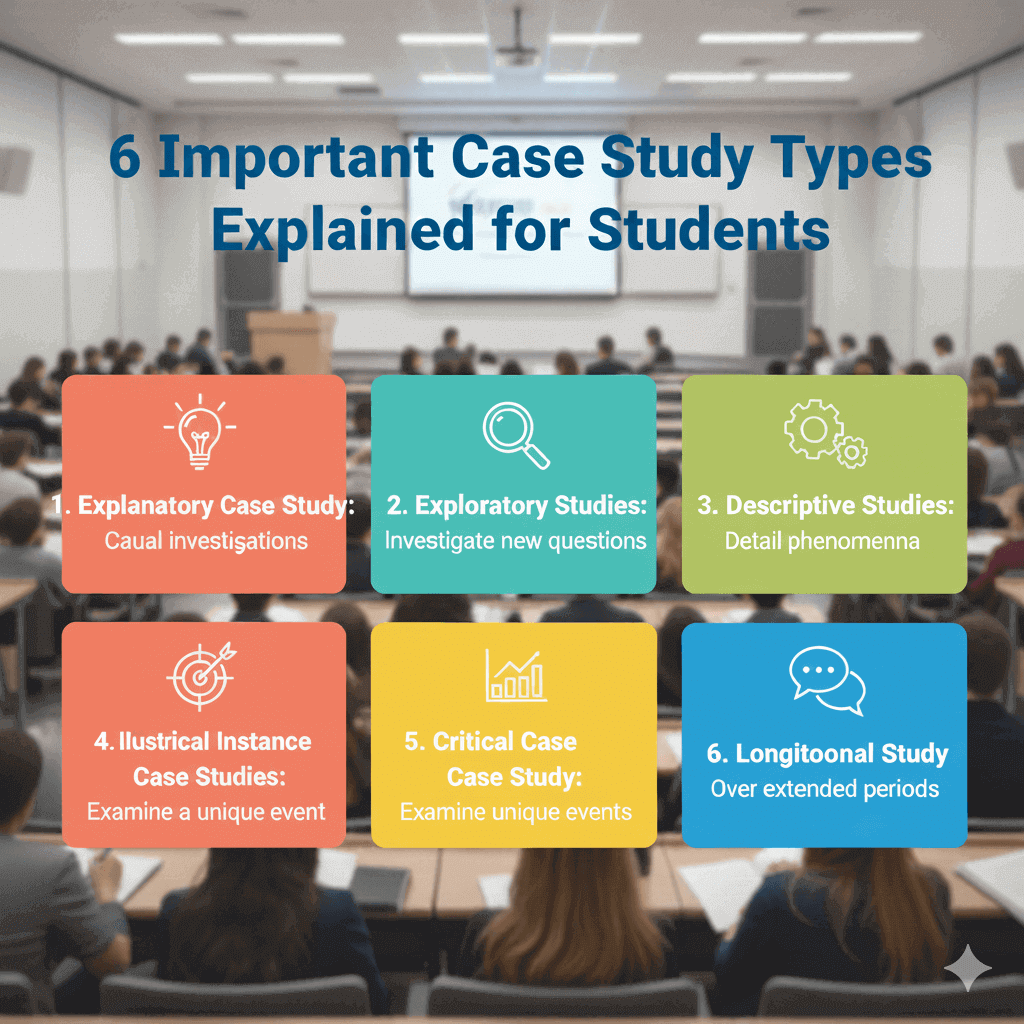
1. Explanatory Case Study
Explanatory case studies answer “why” or “how.” They look at a problem and explain the reasons behind it.
For example, if a student is studying why a store’s sales dropped, an explanatory case study would show step by step why it happened. It’s not just facts, but it connects the dots.
| Focus | Purpose | Example |
| Cause & Effect | Show why something happened | Why a store lost customers |
| Step-by-step | Understand the problem clearly | How a student fixed a classroom issue |
Explanatory case studies are perfect when your assignment needs you to explain things and show understanding.
2. Exploratory Case Study

Exploratory case studies are basically “let’s see what’s going on here.” You’re not trying to answer everything yet. You are poking around, asking about the questions, and noticing things.
For example, if you want to know why some students prefer online classes more, then you don’t jump to conclusions directly. You ask a few people, observe what they do, note down ideas, and check the patterns that show up. You don’t need to do anything complicated or fancy.
Consider it like exploring a new park. You don’t know where all the paths go, and you keep wandering, notice cool things, and figure out which way to go next.
3. Descriptive Case Study

Descriptive case studies are all about telling what actually happened step by step and fact by fact. No guessing, no explaining why, and just the story.
For instance, if a school tried a new reading program, you would describe what the teachers did, how students reacted, and the results. You are only reporting, like saying, “Hey, this is what went down.”
It is fun because you can explain the story in your own words. Messy details and small moments are all counted. People get the complete picture without anything made up.
4. Illustrative Case Study

Illustrative case studies are basically examples to show a point. You pick one story, one person, or one situation, and say, “See? This is what I mean.”
For example, if you want to show how teamwork helps students, describe one group project in detail. You don’t need a lot of data, you have enough data to show the idea clearly.
The best thing about illustrative case studies is that they make things simple to understand. Instead of throwing numbers at someone, you need to tell a story that shows your point. It is simple, direct, and more fun to read.
5. Critical Case Study

Critical case studies are different. They’re like saying, “This one is important. Let’s pay attention.” You pick a case that can teach a big lesson or prove a point.
For instance, if a student wants to show poor time management and its effect on grades, then they may pick one real example. In this example, they will show a student who struggled and explain what went wrong and why it is crucial.
Critical case studies are helpful when you want to focus on their impact. It is about showing something meaningful that teaches others a lesson. It is clear, sharp, and makes readers think.
6. Longitudinal Case Study
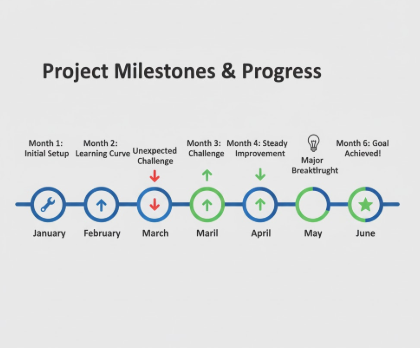
Longitudinal case studies are all about watching something over time. You not only look at one moment, but you follow it for weeks, months, or even years.
For instance, a student may track how a new study method affects grades over the whole semester. They keep the record of what changes, what works, and what doesn’t. It is like checking daily to see the entire story.
Longitudinal case studies are best because they show things change. You can see patterns, problems, or growth that don’t show up in a single snapshot. It is slow, but it gives a clear picture. If you are dealing with an assignment that is based on a longitudinal case study, then you can look for Assignment help. There are numerous service providers out there who offer professional help for students.
How to Pick the Right Case Study
Picking the proper case study doesn’t have to be difficult. Just think about what you want to show and how much time you have.
Here’s a simple guide:
| What You Want | Best Type | Quick Tip |
| Show why something happened | Explanatory | Focus on causes, not just facts |
| Learn more about a topic | Exploratory | Ask questions, notice patterns |
| Tell what happened clearly | Descriptive | Just report the story as it is |
| Give a clear example | Illustrative | Pick one story to make your point |
| Show something important | Critical | Pick a case that teaches a lesson |
| See how things change | Longitudinal | Watch it over time |
Think of it like picking the right tool for the job. Match your goal with the type, and writing becomes way easier.
Frequently Asked Questions
- Can I mix facts and opinions?
Depends on the type. If it is descriptive, then stick to the facts. If it is critical, then you can add your thoughts on why it matters.
- What if I don’t have enough time?
Go for the type that’s quick to handle. Illustrative or descriptive studies are usually faster than longitudinal or exploratory studies.
- Do I need calculations and graphs in my work?
Not really. Just use them if they make your point clearer. A messy little chart is better than nothing.
It’s a Wrap
Case studies don’t have to be boring or scary at all. They are just ways to explain, explore, or show something. Once you understand the six types mentioned above, it all starts to make sense.
Choose the one that matches your goal, keep it simple, and tell a story as if you were telling your friend. Use graphs, tables, and pictures if necessary, but don’t stress and overthink too much. Also, don’t worry about being perfect and pay attention to getting the point across.
Case studies can be fun. You have all the space to dig around, notice things, and share whatever you have learned. The more you do, the easier it becomes, and you feel more confident. So pick a topic, a type, and get started. You will figure things out over time.